Ironsocket: A Practical Guide to Choosing and Using Ironsocket Devices
A comprehensive overview of ironsocket, what it is, how it works, and how to choose and use it effectively.
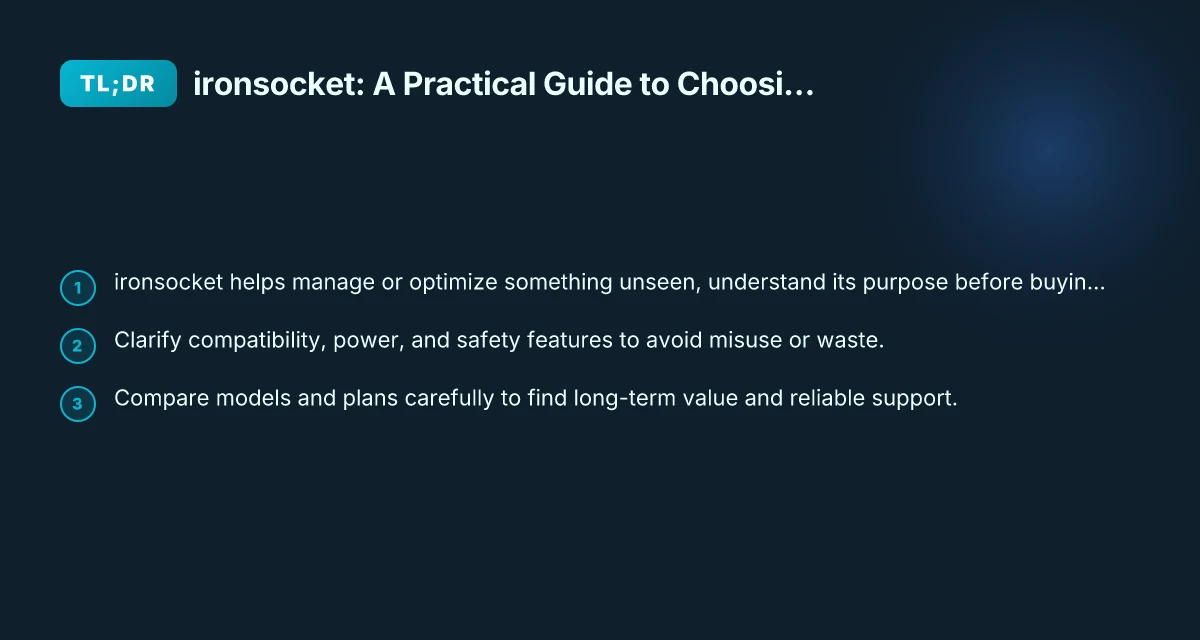
Introduction An ironsocket is a device or service that sits at the intersection of power management and device compatibility. The term isn’t as widely known as common electronics. Understanding ironsocket can help you optimize energy use, protect sensitive equipment, and ensure your gear operates within supported parameters. This guide explains what ironsocket is, how it works, and the key considerations you should weigh before purchasing or subscribing to a service that uses the name or concept.

What is ironsocket?
A practical definition
- ironsocket generally refers to a system or product designed to connect, manage, or monitor electrical loads.
- It can function as a smart outlet, a load-balancing device, or a gateway that communicates with other smart devices.
- In some contexts, ironsocket describes a service that helps with device configuration, firmware updates, or energy optimization.
Common use cases
- Protecting electronics from power surges or brownouts.
- Balancing energy use across multiple devices to prevent tripping circuits.
- Providing remote monitoring and control for home or small office setups.
- Enabling integration with a larger smart home or automation ecosystem.
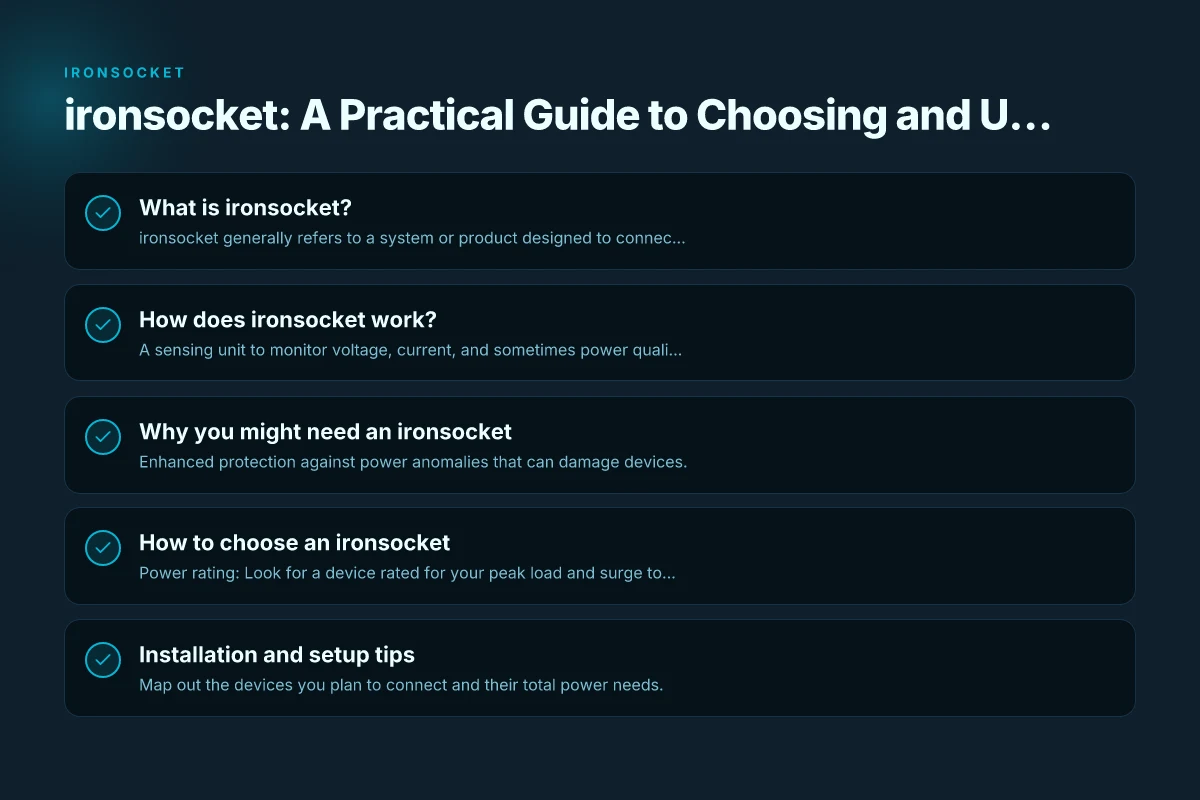
How does ironsocket work?
Core components
- A sensing unit to monitor voltage, current, and sometimes power quality.
- A control unit that makes decisions based on the sensed data.
- A communication module (Wi-Fi, Zigbee, Z-Wave, Bluetooth) to connect to apps or hubs.
- A safety mechanism such as overcurrent protection or thermal cutoffs.
Typical workflow
- The device detects electrical parameters in real time.
- It determines if a load is within safe operating range.
- It can cut off or modulate power to prevent damage or overload.
- It reports data to a companion app or cloud service for monitoring and automation.
Compatibility matters
- Check supported voltages and currents (e.g., 120V/60Hz vs 230V/50Hz in different regions).
- Confirm compatibility with your devices and your preferred smart home ecosystem.
- Look for standards compliance (UL, CE, ETL, FCC) and certifications relevant to your market.
Why you might need an ironsocket
Benefits
- Enhanced protection against power anomalies that can damage devices.
- Better energy management for homes with many electronics or high usage.
- Remote monitoring and control, enabling automation and schedules.
- Insight into power consumption patterns to help with budgeting and efficiency.
When it might not be necessary
- If you have a simple setup with a few basic devices and no automation needs.
- If your devices and power system already include robust surge protection and monitoring.
- If the total cost doesn’t justify incremental benefits.
How to choose an ironsocket
Key features to compare
- Power rating: Look for a device rated for your peak load and surge tolerance.
- Protection features: Overload protection, short-circuit protection, surge suppression, thermal protection.
- Connectivity: Wi‑Fi, Bluetooth, Zigbee, Z-Wave, or Ethernet. Determine which works with your hub.
- Energy monitoring: Real-time readouts, historical charts, and energy reports.
- Automation and scenes: Ability to create schedules, geofencing, or device-based automations.
- Firmware updates: Support for OTA updates and how updates are applied.
- Safety certifications: UL, CE, ETL, RoHS, FCC depending on your region.
- Build and reliability: Durability, enclosure rating (if exposed to dust or moisture), warranty period.
Price vs. value
Consider:
- Purchase price or monthly subscription.
- Cost of additional hubs or compatibility adapters.
- Potential energy savings versus the ongoing cost.
- Availability of customer support and replacement parts.
Model comparison (example)
| Feature | ironsocket A | ironsocket B | ironsocket C |
|---|---|---|---|
| Max load | 15A | 20A | 15A |
| Energy monitoring | Real-time + daily | Real-time | Real-time + weekly |
| Connectivity | Wi‑Fi + Bluetooth | Zigbee | Wi‑Fi only |
| Surge protection | 600 J | 1200 J | 800 J |
| Automations | Yes (scenes) | Yes (routines) | No |
| Certifications | UL, CE | UL, CE | FCC, RoHS |
| Price | $29 | $49 | $19 |
Note: The table above is illustrative. Your exact model options will vary by region and availability.
Installation and setup tips
Preparing your space
- Map out the devices you plan to connect and their total power needs.
- Identify a central hub or app that will control the ironsocket devices.
- Ensure the area has adequate ventilation for devices that may warm up during use.
Quick-start steps
- Unbox and inspect the device for any packaging damage.
- Place the ironsocket near the devices it will manage, avoiding moisture or heat sources.
- Connect to power and follow the on-screen or app-based pairing instructions.
- Add devices or scenes in the companion app, and test each action.
- Set up routines that align with your daily schedule or energy goals.
Safety reminders
- Do not overload outlets beyond the rated capacity.
- Use devices with proper certifications for your region.
- Keep cords organized to avoid tripping hazards or cover by furniture.
- If you notice warm or burning smells, unplug immediately and inspect.
Troubleshooting common issues
Connectivity problems
- Reboot the device and router.
- Ensure firmware is up to date.
- Move the device closer to the hub or use a more stable protocol like Zigbee if supported.
Inaccurate energy readings
- Calibrate if the device supports it.
- Check for firmware updates that improve measurement accuracy.
- Reset the device to factory settings and reconfigure.
Unexpected device behavior
- Review automations for conflicting rules.
- Check for power fluctuations or an outage in your area.
- Inspect cables and ensure nothing is loose or damaged.
A quick comparison of ironsocket vs. traditional outlets
| Aspect | ironsocket | Traditional outlet |
|---|---|---|
| Monitoring | Real-time energy data | None (basic voltage) |
| Control | Remote on/off and automation | Manual switch |
| Protection | Surge/overload/thermal protection | Often none beyond basic fusing |
| Automation | Yes, with scenes and schedules | Limited to manual timing on some smart plugs |
| Setup complexity | Moderate (hub/app) | Simple (plug-in) |
| Cost | Higher upfront or subscription | Lower upfront |
Final section: recommendation
If you’re looking to optimize energy use, protect sensitive electronics, and add automation to a connected home or small office, ironsocket can be a strong addition. Start by listing your devices, their total load, and the smart home ecosystem you already use. Compare models on power rating, protection features, and compatibility with your hub or app. Favor devices with clear energy monitoring, reliable safety mechanisms, and robust certifications. If you’re on a tight budget or only need simple on/off control, a basic smart plug may suffice. For complex setups with multiple devices and energy goals, ironsocket devices paired with a capable hub can deliver meaningful efficiency gains and smarter living.