Imprint: what it means, how it’s used, and why it matters

A practical guide to imprint, the term, its uses in branding, publishing, biology, and design, and how to apply it effectively.
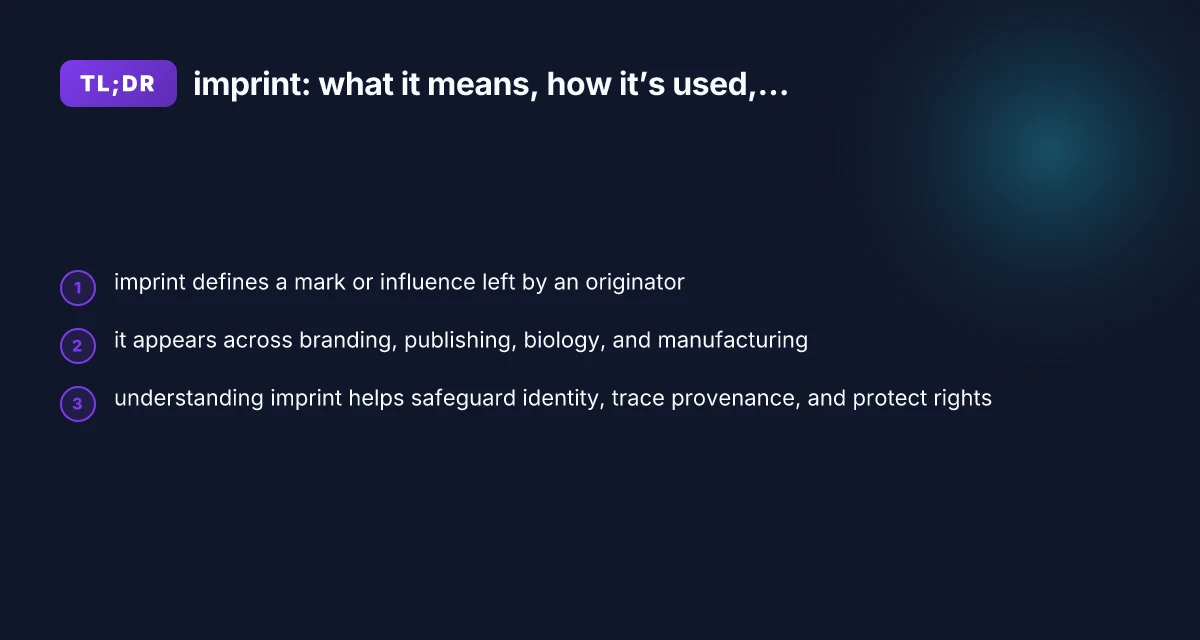
The word imprint shows up in many corners of life, and its meanings are surprisingly interconnected. At its core, an imprint is a mark or influence that identifies origin, ownership, or impact. From brands stamping their identity on products to publishers marking editions, to biology describing how organisms leave traces, imprint operates as both a physical and metaphorical concept. This guide unpacks the different senses of imprint, how they’re created, and how to use the idea responsibly in creative, business, and scientific contexts.

What imprint means in everyday language
Imprint is most often understood as a mark that shows where something came from or who created it. It can be:
- A physical mark: a logo stamped onto goods, a brand name engraved on a tool, or a mold imprint on plastic.
- A trace of influence: the lasting effect of a brand’s design language on consumer perception.
- A publication marker: the publisher’s imprint indicating who released a book, its edition, and sometimes its imprint line (imprint in publishing is a division or brand under a larger publishing house).
The core idea across these meanings is provenance. An imprint helps you identify origin and authenticity, even long after something was created.
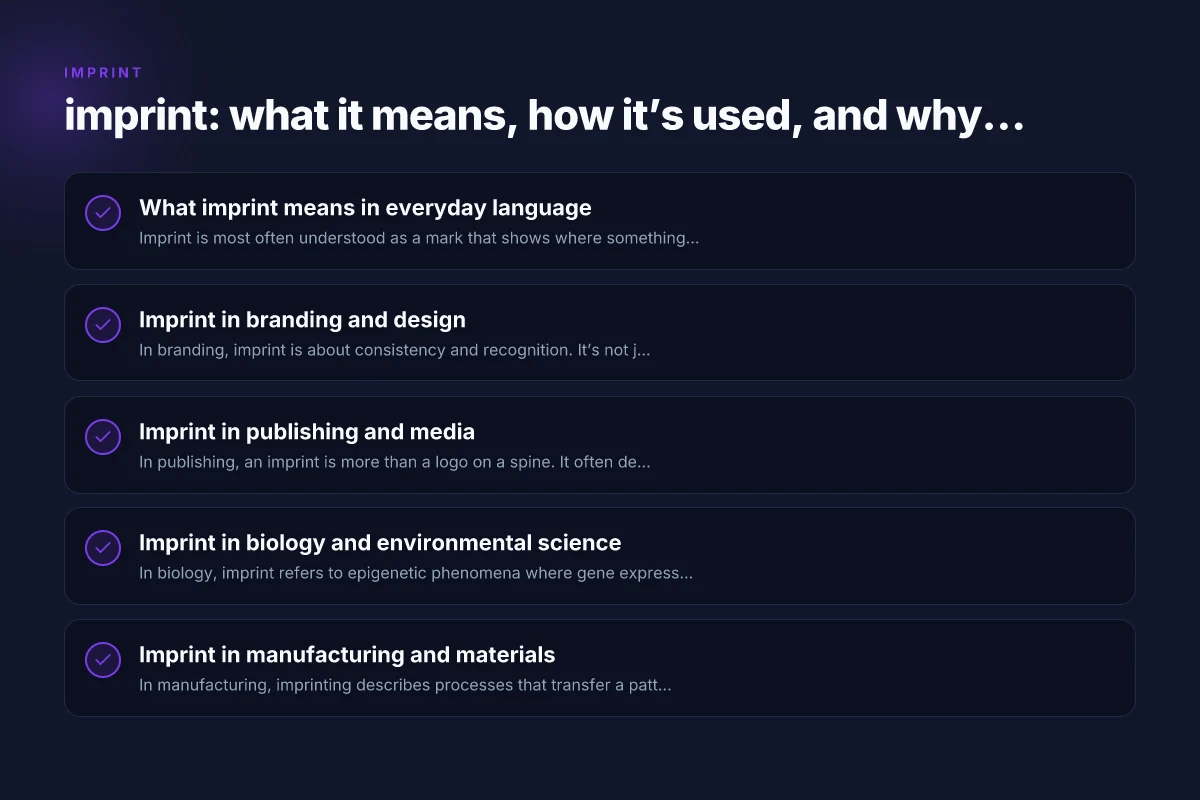
Imprint in branding and design
In branding, imprint is about consistency and recognition. It’s not just a logo. It’s the entire identity package that leaves a lasting impression on an audience. Good brand imprint helps users instantly know the source, values, and quality to expect.
Key aspects of building a strong brand imprint: Impressum: What It Is, Why It Matters, and How to Create One
- Visual consistency: typography, color palette, and logo usage that stay the same across channels.
- Voice and tone: how the brand communicates, friendly, formal, witty, and how that language reinforces identity.
- Physical presence: product packaging, labeling, and even store experiences that carry the brand imprint into the real world.
- Guarding the imprint: rights management, trademark protection, and clear guidelines to prevent dilution.
Practical steps to establish an effective brand imprint:
- Audit current materials for consistency in color, typography, and imagery.
- Create a brand kit with logo files, color codes, font files, and usage rules.
- Train teams and partners on how to apply the imprint correctly.
- Monitor for drift: periodically review materials and reset where necessary.
Imprint in publishing and media
In publishing, an imprint is more than a logo on a spine. It often denotes a subdivision of a publishing house, sometimes with a distinct editorial voice, target audience, or genre focus. Imprints help publishers diversify offerings while leveraging brand trust.
What readers see when encountering an imprint:
- Publisher lineage: knowing who released the work and the editorial standards behind it.
- Genre signaling: imprints may signal mystery, sci-fi, romance, or academic works.
- Edition identity: different imprints may print special editions, translations, or regional releases.
For authors, choosing or negotiating with an imprint matters for reach, marketing support, and alignment with reader expectations. For readers, recognizing imprints can guide expectations about style, quality, and subject matter. Free VPN trial in vietnam
Imprint in biology and environmental science
In biology, imprint refers to epigenetic phenomena where gene expression is affected by parental origin without changing the DNA sequence. Genomic imprinting plays a role in development and can influence traits and disease susceptibility.
Key points about imprinting in biology:
- Parent-of-origin effects: certain genes are expressed depending on whether they were inherited from the mother or father.
- Epigenetic regulation: imprinting involves chemical marks that control gene activity.
- Implications for health: imprinting disorders can lead to conditions like Prader-Will syndrome or Angelman syndrome, highlighting the importance of inherited expression patterns.
Imprinting also appears in ecology and environmental science as a metaphor for how organisms leave traces of their presence in ecosystems. This can guide conservation strategies and sediment or pollen studies, where historical imprints inform current conditions.
Imprint in manufacturing and materials
In manufacturing, imprinting describes processes that transfer a pattern or texture onto a material. This includes stamping, embossing, and molding, where an imprint creates a raised or recessed feature that serves functional or decorative purposes. Free VPN trial in vanuatu
Common imprint techniques:
- Stamping: applying pressure with a die to transfer a metal or polymer pattern.
- Embossing: creating a raised design on paper, fabric, or leather for texture and aesthetics.
- Molded imprints: using a mold to shape materials like plastic or resin, embedding a precise imprint.
Choosing the right imprint method depends on material properties, desired texture, production volume, and cost. Quality control is essential to ensure the imprint remains consistent across batches.
A quick guide to choosing an imprint approach
When deciding how to implement imprint in your project, consider these factors:
- Purpose: Is the imprint for branding, functional texture, or data provenance?
- Material: What substrate will receive the imprint (paper, metal, plastic, fabric, etc.)?
- Durability: Will the imprint endure wear, cleaning, or environmental exposure?
- Scale: How many units are needed, and what is the tolerable cost per unit?
- Legal considerations: Do you need trademark protection or licensing for the imprint?
- Ethical and environmental impact: Are materials and processes sustainable?
Here is a compact comparison to help decide between stamping, embossing, and molding: Free VPN trial in venezuela
| Method | Typical Materials | Typical Applications | Pros | Cons |
|---|---|---|---|---|
| Stamping | Metals, plastics | Hardware, fashion, labels | Durable, scalable, crisp details | Requires dies; setup costs high |
| Embossing | Paper, textiles | Packaging, stationery, leather | Tactile feel, elegant look | Less visible on dark surfaces |
| Molding | Plastics, resins | Components, toys, automotive parts | Complex shapes, high volume capability | Tooling costs; cooling time |
Protecting and leveraging your imprint
A strong imprint can be a strategic asset, but you need to protect and manage it properly.
Practical protection steps:
- Trademark searches: ensure your imprint isn’t already in use in your market.
- Clear branding guidelines: define how your imprint appears on products, packaging, and communications.
- Monitoring and enforcement: watch for counterfeit or diluted usage and take action when needed.
- Digital imprint management: ensure online logos, fonts, and templates are controlled and updated.
Ways to leverage imprint for growth:
- Consistent packaging: a recognizable imprint boosts shelf appeal and trust.
- Limited editions: imprint-driven editions can create exclusivity.
- Co-branding: align with partners who share your imprint values to reach new audiences.
- Sustainability messaging: an imprint that signals ethical sourcing or eco-friendly practices can resonate with conscious consumers.
Final recommendation
If you’re starting fresh, define a clear, cohesive imprint strategy that spans your brand, products, and communications. Begin by crafting a concise imprint story: what origin you want to communicate, what audience you serve, and what imprint traits will make you recognizable. Build a robust brand kit, protect your marks legally, and establish processes to maintain consistency across every touchpoint. In publishing, consider whether an imprint should carry a distinct editorial identity or simply extend the parent brand. In manufacturing or design, map out which imprint technique best aligns with your material, budget, and durability needs. Finally, remember imprint is as much about influence as it is about marks. A well-executed imprint leaves a durable impression that speaks to quality, provenance, and trust. Free VPN trial in uzbekistan