Go trusted: how to navigate trust in everyday decisions and digital life

A practical guide to building and recognizing trust in people, products, and online information.
Trust is not a single switch you flip. It’s a pattern you build over time through consistent actions, clear communication, and reliable outcomes. When you hear “go trusted,” think about who, what, and how you’re willing to rely on in both the real world and the digital one. This article lays out practical steps to identify trustworthy sources, make informed choices, and maintain integrity in your own decisions.

What “go trusted” means in everyday life
Trust is the glue of relationships, purchases, information sharing, and collaboration. It’s not a binary state but a spectrum. You might trust a colleague with sensitive data, a brand with a long record of quality, or a source that consistently corrects its mistakes.
Key ideas:
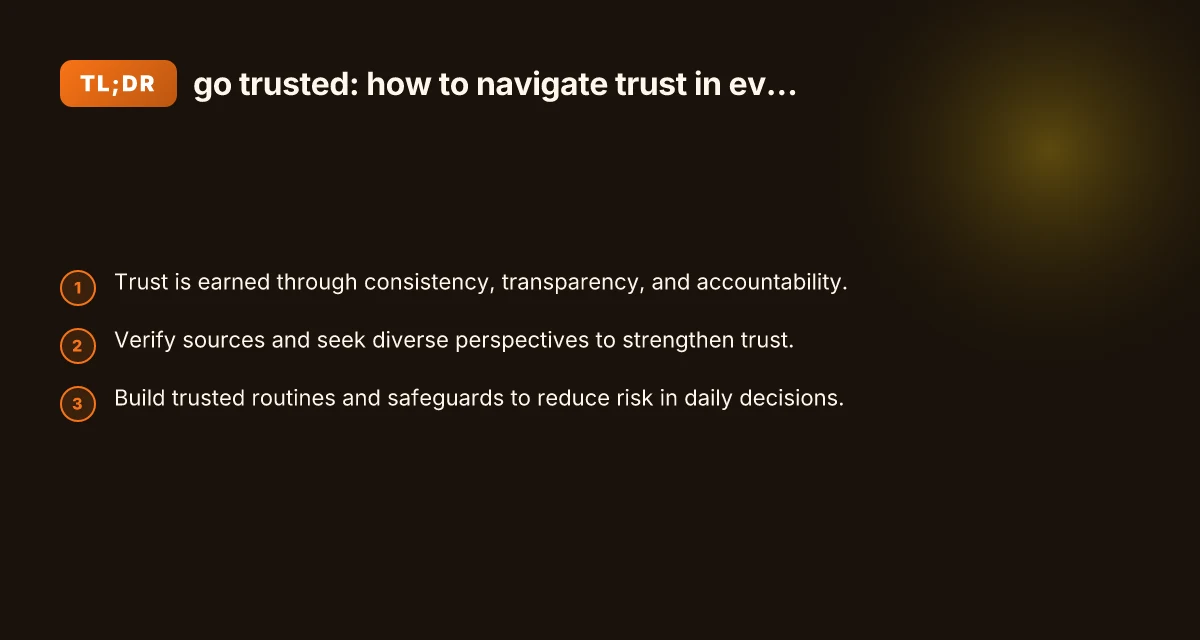
- Consistency over time: Repeated reliable behavior builds trust more than one-off promises.
- Transparency: Clear reasoning, sources, and limits earn credibility.
- Accountability: Owning up to errors and fixing them reinforces trust.
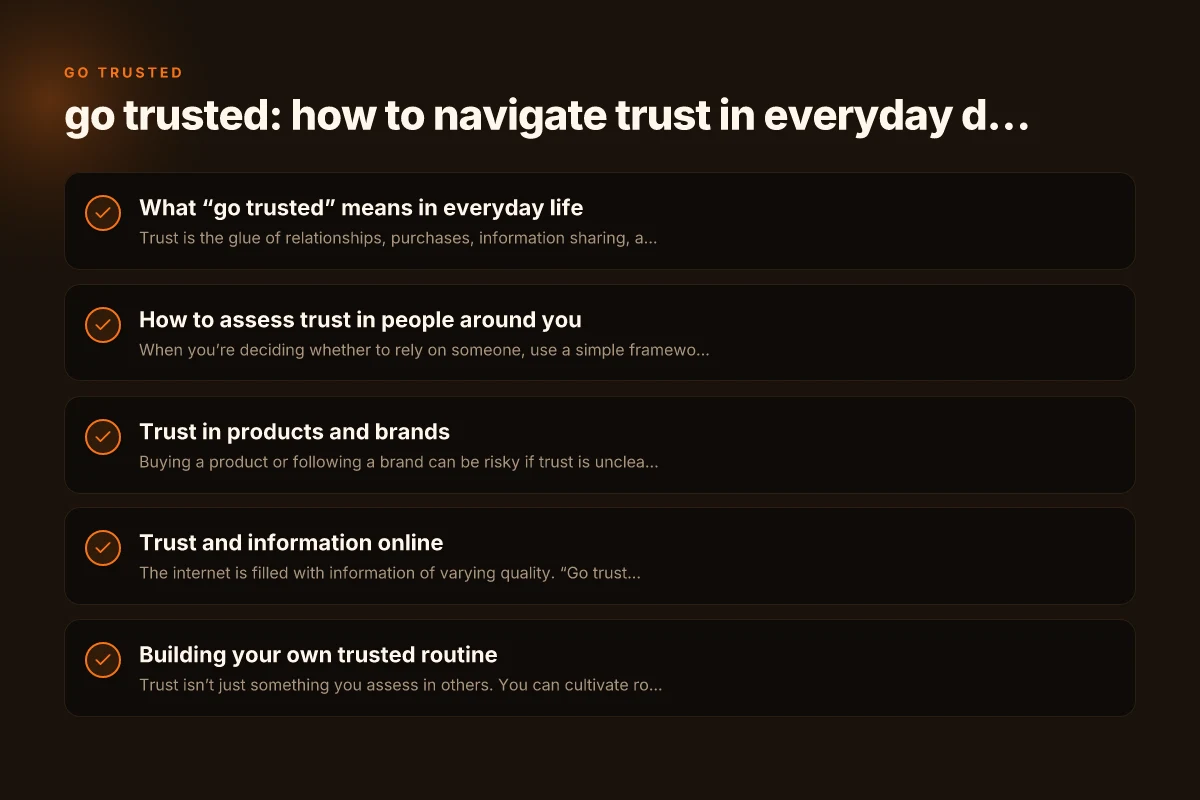
How to assess trust in people around you
When you’re deciding whether to rely on someone, use a simple framework to evaluate credibility without overthinking it.
Checklist to gauge trust: Free2surf: What It Is, How It Works, and How to Use It Safely
- Track record: Have they delivered on promises before?
- Communication: Do they explain their methods and limitations?
- Accountability: How do they handle mistakes or disagreements?
- Boundaries: Do they respect privacy and consent?
- References: What do others say about their reliability?
Practical steps:
- Start with small commitments and scale up as trust grows.
- Ask clarifying questions to reveal their process.
- Look for signals of reciprocity and honesty, such as admitting when they don’t know something.
Trust in products and brands
Buying a product or following a brand can be risky if trust is unclear. Here’s how to evaluate products and brands quickly but effectively.
Quick evaluation guide:
- Origins: Where does the product come from? Are sourcing and manufacturing practices disclosed?
- Performance history: Are there independent reviews and certifications?
- Warranty and support: Is the company willing to stand behind its product?
- Read the fine print: Terms of service, privacy policies, and data usage matter.
- Community signals: What do other customers and user communities say?
Decision hygiene checklist: ExpressVPN: a comprehensive guide to using and evaluating the popular VPN service
- Prefer brands with transparent supply chains and third-party audits.
- Favor products with clear ROI in terms of safety, efficiency, or quality.
- Keep receipts, warranties, and tracking information to preserve accountability.
Trust and information online
The internet is filled with information of varying quality. “Go trusted” here means adopting habits that help you separate signal from noise.
Best practices:
- Verify before sharing: Check the primary source, date, and author.
- Diversify sources: Read multiple perspectives to avoid echo chambers.
- Scrutinize credibility signals: domain reputation, author credentials, and citations.
- Be wary of novelty bias: New or sensational claims deserve extra caution.
- Use fact-checks and reputable databases when in doubt.
Table: quick credibility signals to watch for online
| Signal | Strong indicator? | What to do if unclear |
|---|---|---|
| Author credentials | Yes/Strong | Look up the author, bio, and other works |
| Citations and sources | Yes/Strong | Check cited sources; follow links if possible |
| Date of publication | Important | Prefer the most recent, especially for fast-changing topics |
| Site reputation | Generally reliable | Cross-check with independent sites |
| Sponsored content | Caution needed | Distinguish ad/content and read disclosures |
Building your own trusted routine
Trust isn’t just something you assess in others. You can cultivate routines that make trustworthy choices easier. Earthvpn: What It Is, How It Works, and Whether It’s Right for You
Practical routines:
- Set up a decision framework: Define criteria, thresholds, and review points before acting.
- Maintain a trust ledger: Keep a personal log of whom you trust and why. Update as contexts change.
- Create guardrails: Use privacy settings, data minimization, and consent-based processes.
- Practice transparency: When you make decisions, document the why and share it when appropriate.
- Schedule accountability: Regularly review decisions with a trusted partner or mentor.
When “go trusted” is hard: common pitfalls and how to avoid them
Trust can be undermined by cognitive biases, information overload, and social pressure. Recognizing pitfalls helps you protect against them.
Common traps:
- Authority bias: Believing someone is trustworthy simply because of status.
- Confirmation bias: Favoring information that confirms your beliefs.
- Overtrust after a positive experience: Letting one good interaction override red flags.
- Information overload: Drowning in data and missing critical points.
Ways to counter these: CactusVPN: A Practical Review and Guide to Its VPN Services
- Seek disconfirming evidence and play devil’s advocate.
- Rely on structured decision criteria, not vibes.
- Pause before acting on new information. Give yourself time to verify.
- Use privacy-respecting tools and avoid sharing sensitive data with uncertain sources.
Comparing trusted approaches across contexts
Different contexts require different kinds of trust-building and verification. The table below highlights how to approach trust in personal relationships, professional settings, and digital information.
| Context | Trust focus | Verification methods | Red flags to watch for |
|---|---|---|---|
| Personal relationships | Consistency, empathy, boundaries | Time-tested interactions, mutual accountability | Hidden agendas, evasiveness |
| Professional settings | Competence, accountability, ethics | Demonstrable results, certifications, peer reviews | Subpar outcomes, vague promises |
| Digital information | Accuracy, transparency, privacy | Source checks, cross-references, data policies | Misinformation, undisclosed sponsorships |
Final recommendations: go trusted with clarity and care
- Start small: Build trust gradually by testing commitments, not by chasing perfection.
- Prioritize transparency: Demand clear explanations and access to sources when possible.
- Guard your data: Use privacy-minded habits and limit sharing until trust is established.
- Diversify your trust network: Don’t rely on a single source or person for critical decisions.
- Revisit and update: Trust is dynamic. Periodically reassess who and what you rely on.
If you want a concise action plan to start today:
- Pick three areas where you need more trust (e.g., a website you frequent, a supplier, a colleague).
- For each, list at least three signals you’ll verify (author credibility, sourcing, privacy policy).
- Set a 30-day trial period during which you’ll track outcomes and adjust your trust assessment.
In the end, go trusted is not about never taking a leap. It’s about ensuring the leap is grounded in reliable signals, transparent reasoning, and accountability. By applying the practices above, you can navigate both everyday decisions and online information with greater confidence and fewer surprises.